Full Blog Post:
Whether you're towing a trailer for the first time or just want to double-check your setup before hauling a load across North Florida, understanding your trailer hitch is non-negotiable. From choosing the right hitch class to connecting safely, this guide will break down the basics so you can hit the road with confidence.
A trailer hitch is a device attached to the chassis of your vehicle that allows you to tow a trailer. It’s the critical link between your vehicle and whatever you're pulling—whether it’s a boat, utility trailer, or camper.
Class I: Up to 2,000 lbs (think small utility trailers or bike racks)
Class II: Up to 3,500 lbs (jet skis, small campers)
Class III: Up to 5,000 lbs (most common for trucks/SUVs)
Class IV: Up to 10,000 lbs (heavier equipment or large trailers)
Class V: Up to 20,000 lbs (gooseneck, commercial hauling)
Make sure your hitch, ball mount, and towing vehicle are all rated for your load. It's not just about the trailer—your vehicle's towing capacity matters just as much.
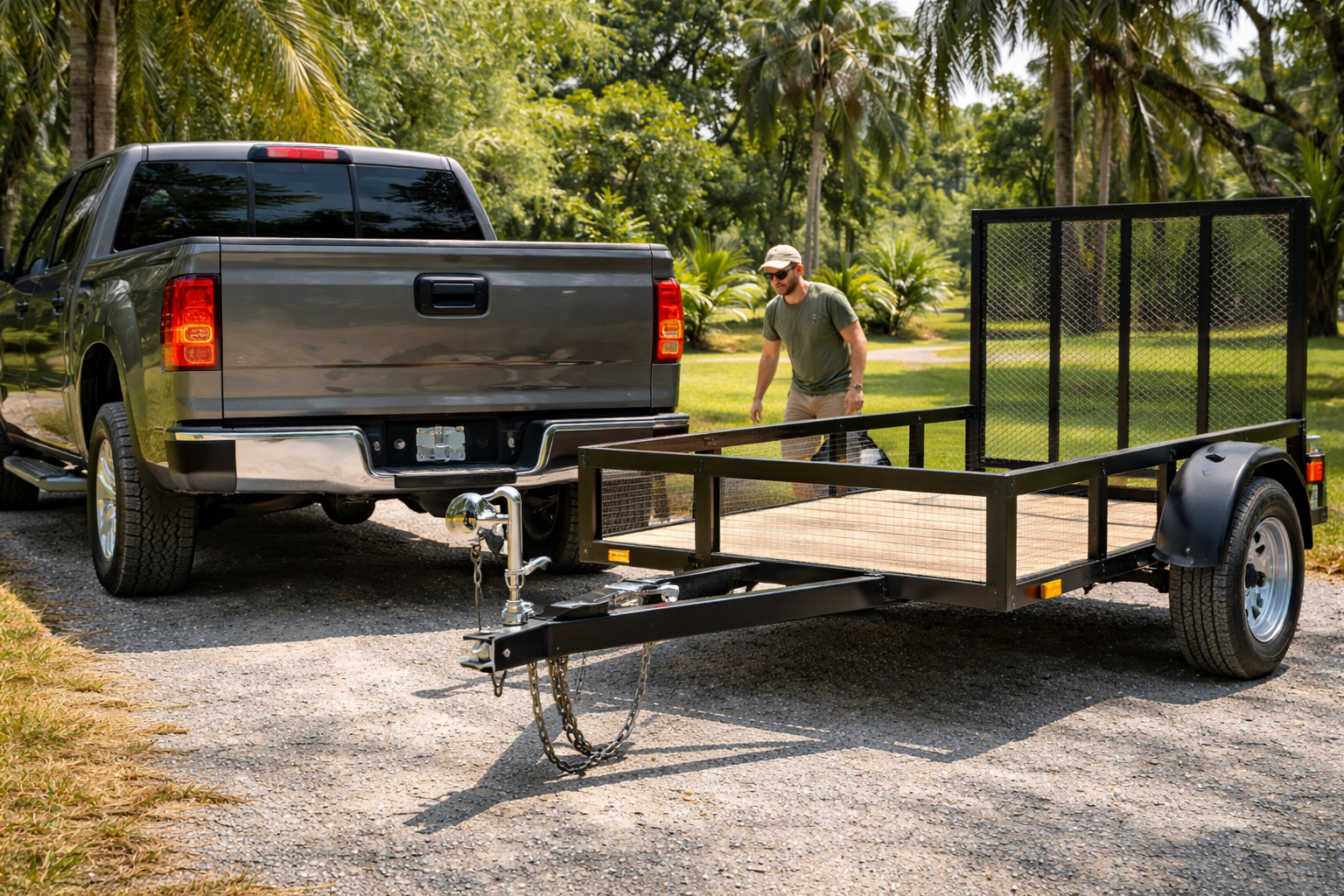
The ball mount slides into your vehicle’s receiver tube and holds the trailer ball (which connects to your trailer's coupler). Always secure it with a hitch pin and clip or a locking mechanism to prevent theft.
Check that the trailer is level when hitched up—an uneven trailer can affect handling and braking.
You’ll need a wiring harness to connect your trailer’s lights and brakes to your vehicle. In Florida, it’s illegal to tow a trailer without working lights. Test them before every trip: tail lights, brake lights, and turn signals.
Never tow without safety chains crossed beneath the coupler. They act as a backup in case the trailer disconnects. If you’re towing over 3,000 lbs, Florida law requires a braking system (like electric brakes) for added control.
Towing gear takes up space—and it’s heavy. Instead of cluttering your garage, consider renting a nearby storage unit where you can keep your trailer accessories, ramps, jacks, and gear all in one secure spot 🛠️
